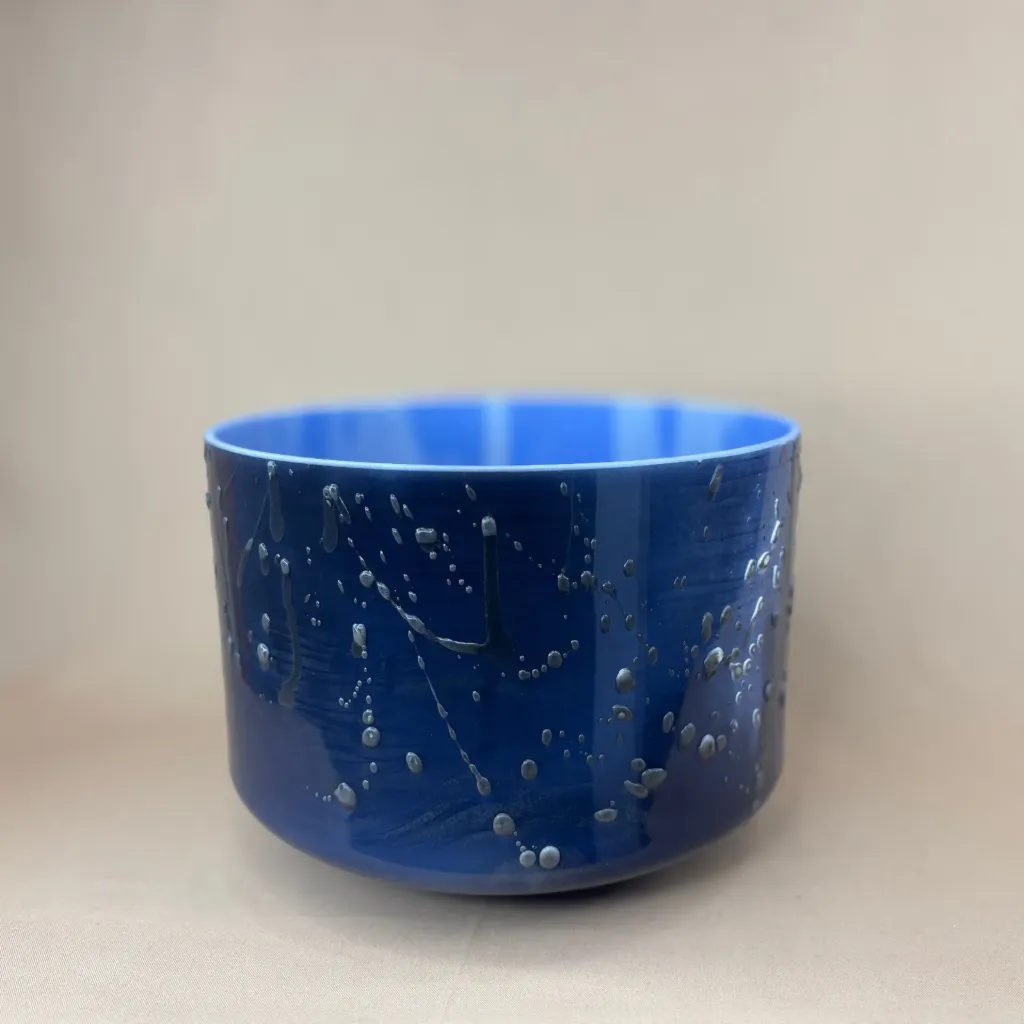
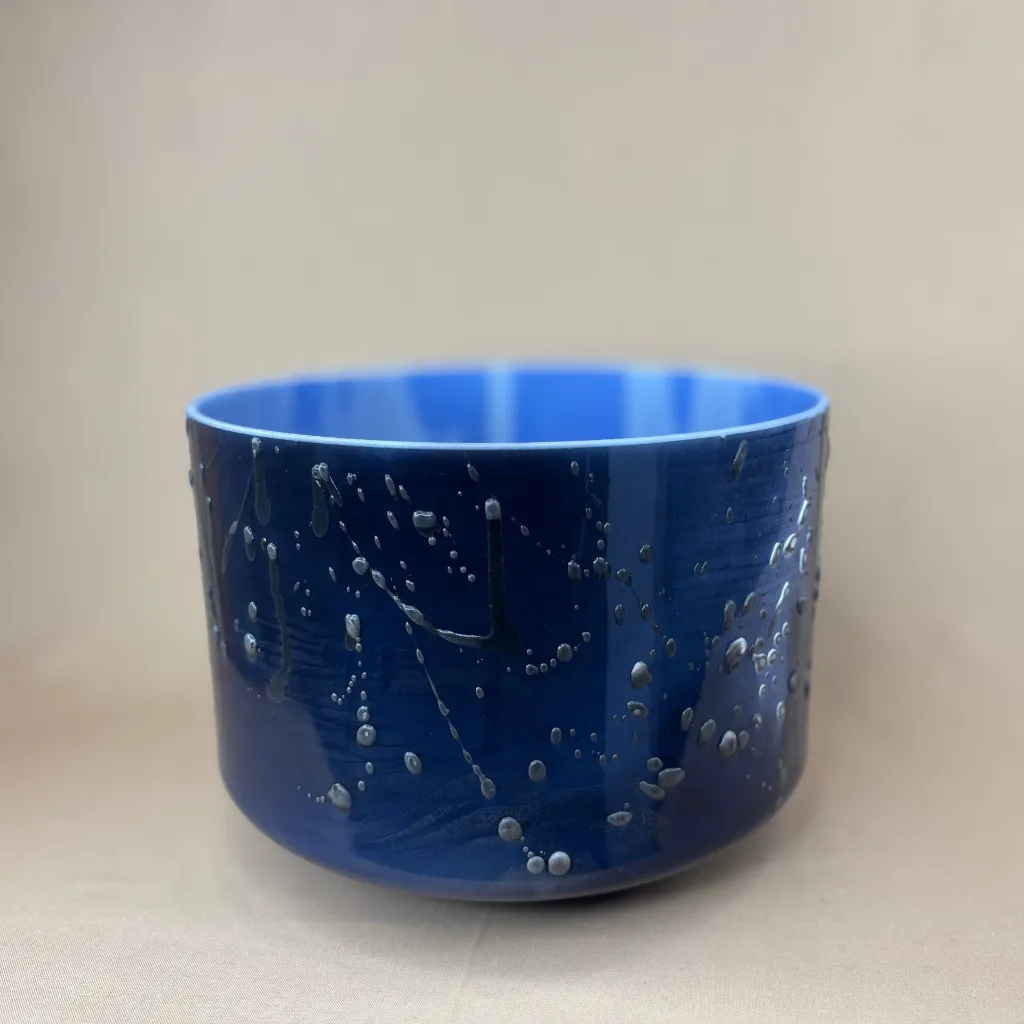
The D note at 294 Hz corresponds to the sacral chakra in the Western diatonic system, creating an unusual pathway for lapis lazuli's traditional throat chakra work. This bowl addresses the root of communication blocks—disconnection from authentic feeling—rather than fear of speaking itself. By activating emotional honesty in the body's core before moving to verbal expression, it serves people who can talk fluently but struggle to know what they actually mean. The sacral-to-throat progression makes articulation feel organic rather than forced.
This combination serves anyone whose communication challenge stems from emotional disconnection rather than performance anxiety. Teachers and presenters preparing to speak with genuine conviction, writers facing "I don't know what I want to say" blocks, therapists processing sessions where unspoken truths accumulated, and parents navigating difficult conversations where rehearsed words won't work. Athletes and performers use it to access authentic confidence before high-stakes moments. The D note's creative, flowing quality loosens what's been held while lapis creates conditions for that material to find words.
Most throat chakra bowls work in higher octaves targeting the neck and upper chest. This 294 Hz bowl vibrates through the torso, chest cavity, and core—the physical center where breath becomes voice. Rather than pushing expression outward from the throat, it clears constriction in the emotional body first. Practitioners report clients become more articulate not because they've rehearsed, but because they've reconnected with what they actually feel. It's the bowl for "I smile and say fine but mean something else entirely" rather than "I'm afraid to speak up."
Lapis lazuli directly addresses the creative block that stems from not knowing what you want to express—distinct from fear of judgment or perfectionism. The stone's six-thousand-year association with authentic voice combines with the D frequency's emotional flow to dissolve the particular paralysis of "I have nothing to say." Writers report accessing genuine material rather than performing what sounds good. Artists find clarity about which direction feels true. The bowl doesn't generate ideas; it clears the static between your authentic impulse and your conscious awareness of it.
At nine inches with fourth-octave resonance, this bowl produces full, rich volume with long sustain that fills rooms without overwhelming. The 294 Hz frequency carries lapis lazuli's dignified presence—it doesn't whisper, it speaks with the authority the stone has held for millennia. Ideal for yoga studios, classrooms, or living rooms where you want immersive sound that reaches everyone present. The size allows the bowl's truth-speaking quality to command attention while remaining portable. Practitioners use it to open group discussions requiring vulnerability or close sessions where unspoken material needs acknowledgment.
Yes. This bowl resonates at 294 Hz, which falls within concert pitch range (A=440 reference system). It plays D+5 cents, meaning it will sound in tune when played alongside guitars, keyboards, pianos, or any instrument using standard tuning. Musicians incorporating singing bowls into performances, or practitioners wanting bowls to blend with recorded music during sessions, find this compatibility makes integration effortless. The bowl also provides an A=432 equivalent (D+34 cents) for those working with instruments tuned to that alternative reference standard.