No—lepidolite doesn't deliver biochemical effects through skin contact or proximity. While pharmaceutical lithium compounds stabilize mood through brain chemistry, working with lepidolite operates through intention, ritual, and the supportive context of sound practice. The calming people report comes from the practice itself, not mineral absorption. The lithium content shapes the bowl's energetic signature during infusion, creating a resonance that practitioners describe as softer and more enveloping than clear quartz alone.
Therapists and counselors use lepidolite bowls to clear residual emotional energy between clients, creating neutral space for the next session. Students reach for it before exams or presentations when calm focus matters more than stimulation. Parents play it during bedtime routines for anxious children who need permission to settle. Athletes use it for post-competition recovery when the nervous system needs downregulation after high-intensity output. Anyone navigating burnout, grief, or major life transitions finds it creates conditions for rest without forcing anything.
Most throat chakra work emphasizes outward expression—speaking up, finding your voice, claiming space. Lepidolite at 382 Hz works differently: it supports communication rooted in stillness rather than reactivity. The grounding frequency combined with lepidolite's nervous-system-calming properties means words emerge from presence, not pressure. Practitioners notice they say what they actually mean instead of what anxiety dictates. It's the bowl for speaking after you've settled, not speaking to settle yourself.
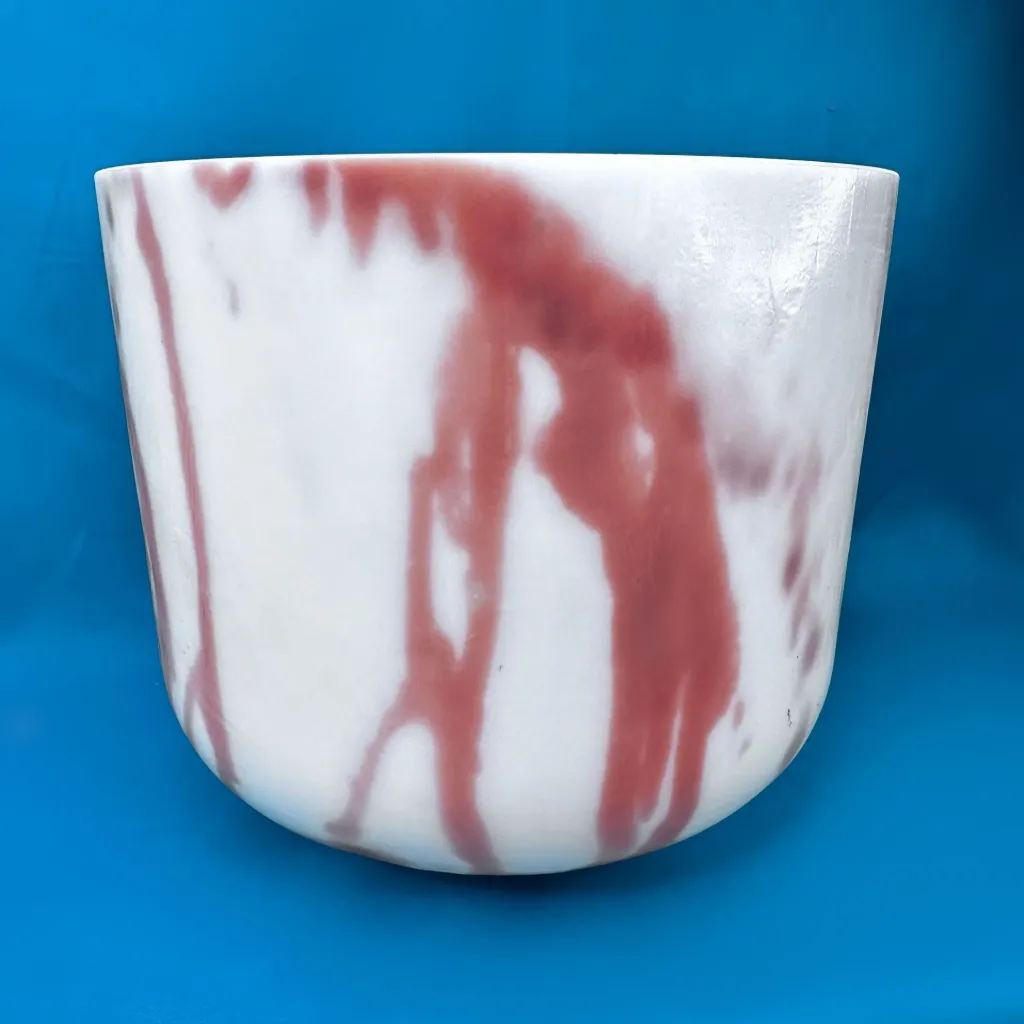
Lepidolite's molecular structure—sheet-like layers of lithium-rich mica—integrates into the quartz during Divine Bowls' proprietary infusion process, becoming part of what physically vibrates. This isn't a surface coating; it's molecular-level integration that changes the bowl's resonance signature. People consistently describe the tone as more enveloping, less piercing—a quality that mirrors lepidolite's geological formation in the late cooling stages of granite, where pressure eases and space opens. The mineral's layered, gentle structure translates directly into how the bowl sounds.
This bowl resonates at 382 Hz, which harmonizes with instruments tuned to both A=432 Hz (landing at G-14 cents) and A=440 Hz (landing at G-45 cents). It's categorized as Grounding Tuning because its frequency falls below the A=432 range, producing an even deeper, more anchoring quality. This pairs naturally with lepidolite's calming properties—the bowl doesn't just soothe mentally, it grounds somatically. Practitioners working with nervous system regulation or helping clients settle before deep inner work find this combination particularly effective.
Lepidolite is permanently integrated at the molecular level during formation—it won't fade, wash off, or degrade with normal use. The bowl is waterproof, temperature-stable, and sunlight-safe. Clean with water and mild soap if needed; the infusion is part of the quartz structure itself, not a coating. Divine Bowls' seamless one-piece construction means no weak points or welds. These bowls are built to last lifetimes of daily use, whether you're playing it for personal practice or professional sessions.