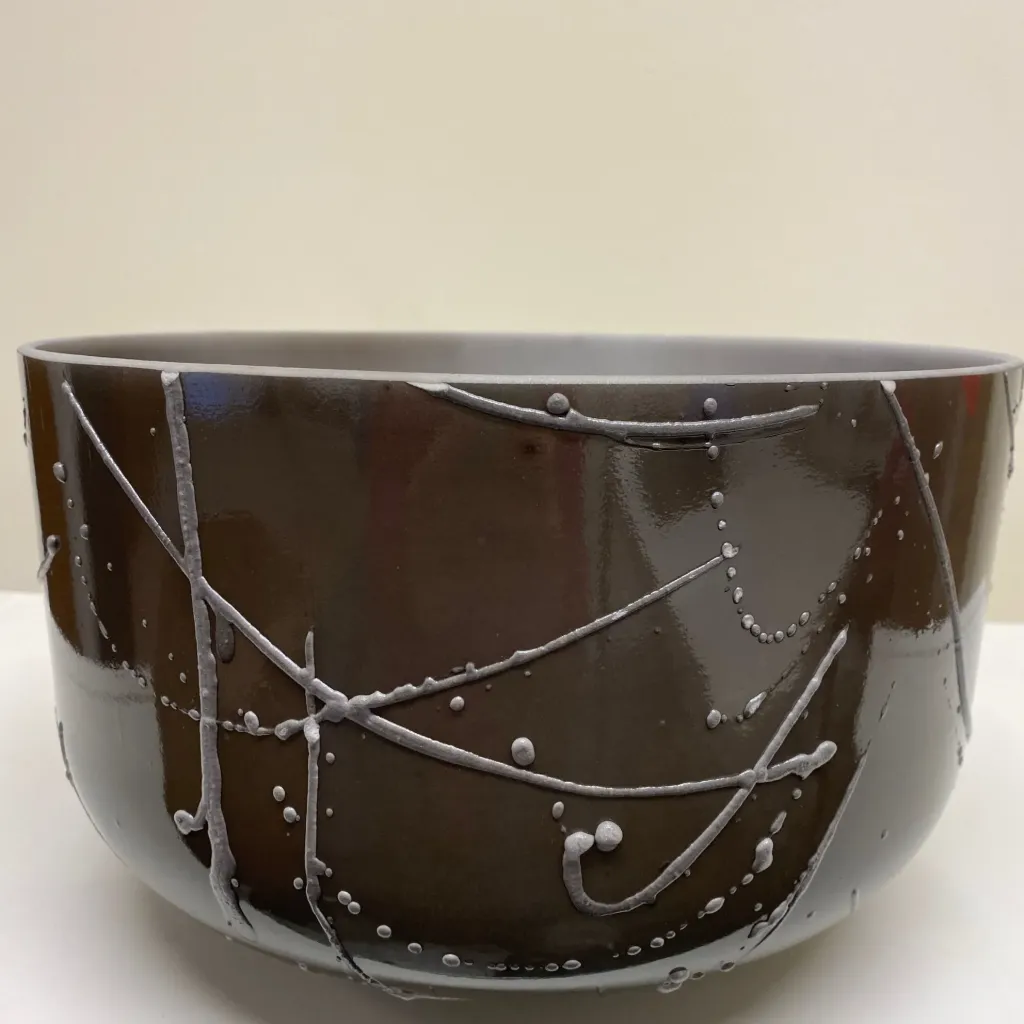
Stibnite is antimony sulfide, a soft metallic mineral with needle-like crystals that has been used for 5,000 years in purification rituals and ancient medicine. In singing bowls, its crystalline structure amplifies low-frequency vibrations into deep tissue and fascia, creating a grounding effect that practitioners describe as "heavier" or "more anchored" than other minerals. It's particularly effective for nervous system regulation after chronic stress, supporting those who've been running on adrenaline and need to remember they have a body.
This bowl's 216 Hz frequency is a mathematically pure octave of 432 Hz (432 ÷ 2 = 216), earning it the name "Cosmic A" or "Sacred A" in sound healing traditions. When stibnite's downward-pulling, grounding energy meets this frequency of intuitive wisdom (A note, third eye chakra), it creates conditions for insight that comes through the body rather than bypassing it. Practitioners report "rooted vision"—grounded knowing rather than unmoored spiritual experience—making it ideal for decision-making, shadow integration, and embodied presence work.
Stibnite serves high-performers navigating chronic stress: executives centering before critical decisions, athletes recovering from intense training, students managing exam anxiety, and parents helping children settle at bedtime. Its grounding properties support anyone whose nervous system runs like an overtightened wire—business owners opening difficult meetings, teachers calming scattered classrooms, or individuals doing shadow work and grief processing. The bowl's "come down from chaos" energy makes it a practical tool for daily stress management, not just ceremonial use.
Stibnite's needle-like crystals and metallic conductivity create a unique vibrational signature—users consistently describe the tone as "heavier" or "more weighted" compared to other infused bowls. The mineral's crystalline needles appear to extend low-frequency resonance deeper into the body's foundational zones (pelvis, hips, lower spine), where chronic tension accumulates. This isn't subjective: stibnite's antimony content facilitates electron transfer at the molecular level, potentially enhancing the bowl's ability to conduct vibration through tissue and fascia during sound sessions.
Stibnite is permanently integrated at the molecular level during formation—it won't wash off, fade in sunlight, or degrade with temperature changes. The bowl is waterproof and as durable as pure quartz (built to last lifetimes). Clean with water and mild soap if needed; the seamless one-piece construction has no weak points or welds. The only consideration: stibnite naturally tarnishes to iridescent black when exposed to air, which is part of its character—this doesn't affect the infusion within the quartz or the bowl's resonance.
Yes—this bowl is categorized in A=432 tuning because its 216 Hz frequency aligns precisely with instruments tuned to A=432 Hz (often called "Verdi tuning" or "natural tuning"). It plays A+0 in the A=432 system, meaning it sits at the exact mathematical center—a pure harmonic anchor. If you have Tibetan bowls, tuning forks, or other instruments tuned to A=432, this bowl will harmonize beautifully. Stibnite's grounding properties pair naturally with A=432's reputation for warmer, more organic sound quality that many find easier on the nervous system.